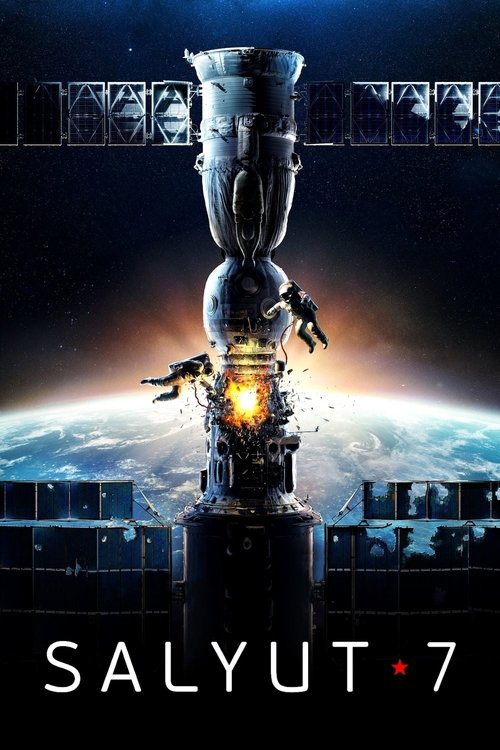
Salyut-7(2017)
PG-13
09/22/2017 (US)Action, Drama, Adventure1h 46m7.1
Overview
USSR, June 1985. After contact with the Salyut 7 space station is lost, cosmonauts Vladimir Dzhanibekov and Viktor Savinykh dock with the empty, frozen craft, and bring her back to life. Based on actual events.
Bakur Bakuradze
Writer
Klim Shipenko
Director
Klim Shipenko
Writer
Alexey Chupov
Writer
Natalya Merkulova
Writer
Aleksey Samolyotov
Writer
Top Billed Cast



















Where to Watch
No streaming providers found for this country.
Popularity Trend
Last 30 Days
This chart shows the popularity trend over the past 30 days.
Media
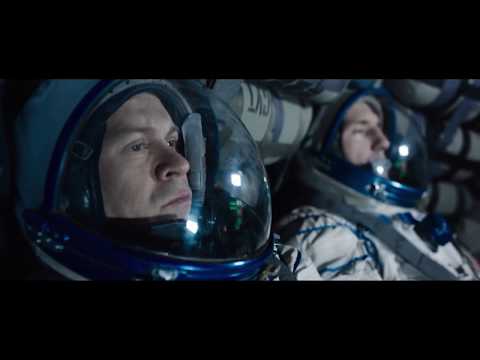
SALYUT - 7 |Official Trailer HD | English Audio - 2018 | This version of the trailer can be play by any regions
Trailer
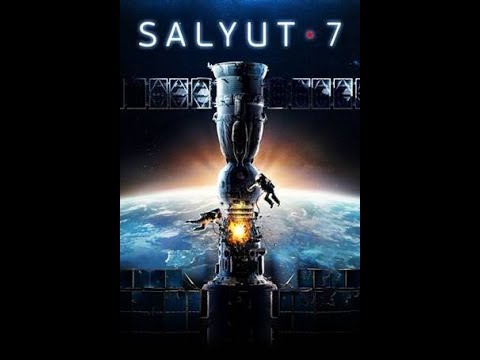
Salyut - 7 (Official Trailer) | This version of the trailer can not be play by some USA regions
Trailer
Social
T
A review by tmdb28039023
6.0
Written on September 8, 2022
Salyut-7 is packed with such sublime imagery that it would be possible to enjoy it without subtitles or knowledge of the Russian language — which is actually not a bad idea, because the plot has been exaggerated to such an extent that Baron Münchhausen himself wouldn’t buy it.
In a nutshell, after contact with the Salyut 7 space station is lost, cosmonauts Vladimir Fyodorov (Vladimir Vdovichenkov) and Viktor Alyokhin (Pavel Derevyanko) are sent to try to commandeer the ship and repair it. The ensuing docking attempts, edited by Mariya Sergeenkova almost like a mating dance, provide the film's best sequences. Meanwhile, Sergey Astakhov and Ivan Burlakov's cinematography captures the most impressive and, dare I say, convincing outer space scenes I’ve seen since Ad Astra (which was actually released two years later).
Salyut-7's visual prowess, however, isn't limited to the vastness of space, and indeed thrives equally well in the confined spaces within the ship. While in orbit, the film is in general a feast for the viewer's eyes. The problem is that the filmmakers spend too much time on Earth manufacturing unnecessary and unlikely conflicts.
The mission is a race against time for two reasons. The first has to do with the idea that NASA is carrying out a mission to recover Salyut-7 and steal Soviet secrets with the space shuttle Challenger (pre-disaster, of course), bringing the station to Earth within the shuttle's cargo bay.
This premise would be fine for a James Bond flick, but here it only manages to detract from the gravity, if you will, of the situation. The second reason is the limited amount of oxygen, the low temperature, and other conditions that Vladimir and Viktor have to deal with, forcing them to repair the station in a few days if they don't want to die of hypoxia and/or hypothermia.
The real-life mission actually lasted 112 days (over three months), and the astronauts wore warm clothes (in the movie they don't even have gloves). Many other events are wildly hyperbolized or shamelessly made up, while others are just plain clichés — like the guy in the control center getting all thoughtful while everyone else celebrates.
It's a shame, because Salyut-7 is, aesthetically speaking a perfect illustration of the apocryphal anecdote according to which NASA spent a lot of money developing a pen that could write in zero gravity ((feel free to substitute 'Nasa' with 'Hollywood' and 'pen that could write in zero gravity' with 'CGI')) while the Soviets simply used pencils.
In a nutshell, after contact with the Salyut 7 space station is lost, cosmonauts Vladimir Fyodorov (Vladimir Vdovichenkov) and Viktor Alyokhin (Pavel Derevyanko) are sent to try to commandeer the ship and repair it. The ensuing docking attempts, edited by Mariya Sergeenkova almost like a mating dance, provide the film's best sequences. Meanwhile, Sergey Astakhov and Ivan Burlakov's cinematography captures the most impressive and, dare I say, convincing outer space scenes I’ve seen since Ad Astra (which was actually released two years later).
Salyut-7's visual prowess, however, isn't limited to the vastness of space, and indeed thrives equally well in the confined spaces within the ship. While in orbit, the film is in general a feast for the viewer's eyes. The problem is that the filmmakers spend too much time on Earth manufacturing unnecessary and unlikely conflicts.
The mission is a race against time for two reasons. The first has to do with the idea that NASA is carrying out a mission to recover Salyut-7 and steal Soviet secrets with the space shuttle Challenger (pre-disaster, of course), bringing the station to Earth within the shuttle's cargo bay.
This premise would be fine for a James Bond flick, but here it only manages to detract from the gravity, if you will, of the situation. The second reason is the limited amount of oxygen, the low temperature, and other conditions that Vladimir and Viktor have to deal with, forcing them to repair the station in a few days if they don't want to die of hypoxia and/or hypothermia.
The real-life mission actually lasted 112 days (over three months), and the astronauts wore warm clothes (in the movie they don't even have gloves). Many other events are wildly hyperbolized or shamelessly made up, while others are just plain clichés — like the guy in the control center getting all thoughtful while everyone else celebrates.
It's a shame, because Salyut-7 is, aesthetically speaking a perfect illustration of the apocryphal anecdote according to which NASA spent a lot of money developing a pen that could write in zero gravity ((feel free to substitute 'Nasa' with 'Hollywood' and 'pen that could write in zero gravity' with 'CGI')) while the Soviets simply used pencils.